
Materials
Metal Roofing in Colorado: Code, Cost and the Myths
Metal is the most misunderstood roofing option on the Front Range. Two of the common objections are simply wrong, and one of the common selling points is oversold.
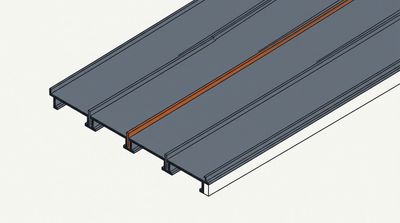
Metal comes up on maybe one Front Range quote in ten, and the conversation usually runs on folklore rather than specification. Here is what the code actually requires and which of the objections hold up.
What the code requires
In Littleton, metal roofing must be listed and approved for wind resistance using UL 580 or ASTM E1592 at 150+ mph. Manufacturer specifications demonstrating compliance must be submitted at permit intake, and permits are not accepted without that documentation. Full tear-off to deck applies, with no overlays.
That sits against a city-adopted ultimate design wind speed of 136 mph and a ground snow load of 40 psf, non-reducible.
Comparison with the other coverings in the same policy:
| Material | Standard | Rating |
|---|---|---|
| Asphalt shingles | ASTM D7158 | Class H, up to 150 mph |
| Metal roofing | UL 580 / ASTM E1592 | 150+ mph |
| Clay / concrete tile | ASTM C1167 | 150+ mph, high-wind install |
The three myths
“It is noisy”
This comes from a real memory of a genuinely noisy roof: corrugated metal screwed to open purlins over a barn, shed or carport, with nothing between the panel and the air.
A residential metal roof is a different assembly. Solid decking, underlayment, an insulated attic and a ceiling all sit between the panel and you. Against an asphalt roof on the same house, the difference in a rainstorm is minor.
“It attracts lightning”
It does not. Lightning is not attracted to metal; it follows the path determined by charge distribution and height.
If a strike does occur, a metal roof is arguably safer: it disperses the energy across a large conductive surface rather than concentrating it, and it is non-combustible.
“It will rust”
Modern residential metal roofing is typically steel with a metallic coating and a factory paint finish, or aluminum. Rust on a properly specified and installed roof is not the normal failure mode.
Where metal roofs do fail, it is usually at fasteners, penetrations and seams — which is a workmanship question, not a material one.
The one that is oversold
“Metal is hail-proof.” It is not.
Hail dents metal. On the Front Range, which records the highest frequency of large hail in North America, a metal roof will collect dents over its life.
The honest framing is a trade of failure modes:
- Asphalt takes hail as bruising to the mat, which shortens service life and eventually ends the roof. The damage is functional and invisible.
- Metal takes hail as denting, which is usually cosmetic and does not compromise the water barrier. The damage is visible and usually not functional.
So the storm that totals an asphalt roof may leave a metal one watertight but marked. Whether that is a good trade depends on how much the appearance matters to you — and on your policy.
Some Colorado policies exclude or limit claims for cosmetic damage to metal roofing. That means a dented but functional roof may not be a claim at all.
Ask your carrier directly before choosing metal, because it changes the risk calculation materially and it is not something your roofer can tell you.
Where metal genuinely earns its place
- Long service life. Considerably longer than asphalt on the same house, which changes the whole-life cost even at a higher upfront figure.
- Wind performance. The 150+ mph listings Littleton requires are comfortably above the adopted design wind speed. On foothills-exposed properties in Morrison, Ken Caryl or western Lakewood, that is not academic.
- Snow shedding. Standing seam sheds snow readily, which can reduce loading. Worth pairing with snow guards where the roof discharges over a doorway, path or parking space.
- Fire resistance. Non-combustible, which matters for properties in a designated Wildland Urban Interface hazard area along the western edge of the metro.
- Low slope capability. Metal works at pitches where asphalt shingles are simply not permitted — Littleton prohibits asphalt below 2/12.
Where it is the wrong answer
- HOA restrictions. Many south metro associations, particularly in Highlands Ranch, Lone Tree and Parker, constrain roofing to an approved palette and profile that may exclude metal. Check before you fall in love with it.
- Short ownership horizon. The economics depend on a long service life. If you are moving in five years, the next owner gets the benefit.
- A budget that is already tight. Money spent on ventilation, sheathing and flashing detail affects whether a roof lasts. Money spent on a premium covering over a bad assembly does not.
- Complex, cut-up rooflines. Metal rewards simple planes. Lots of valleys, dormers and penetrations mean lots of custom flashing, and the cost climbs steeply.
What to ask if you are considering it
- What is the UL 580 or ASTM E1592 listing for the specific panel, and can I see the documentation that will go to permit intake?
- Is this standing seam with concealed fasteners, or an exposed-fastener panel? Exposed fasteners are cheaper and are the long-term maintenance item.
- What gauge is the steel, and what is the finish warranty?
- How are penetrations and valleys detailed?
- Does my HOA permit this profile and color?
- Does my insurer cover cosmetic hail damage on metal?
Low-slope and membrane options → · The full wind resistance requirements →